Best Position to Read a Book Reddit
i. Open book.
2. Read words.
3. Close volume.
4. Motility on to adjacent book.
Reading a book seems like a pretty straightforward job, doesn't it? And in some cases, information technology is. If yous're reading purely for entertainment or leisure, it certainly can be that easy. In that location's another kind of reading, though, in which we at least try to glean something of value from the volume in our hands (whether in paper or tablet form). In that instance, y'all might be surprised to acquire that information technology'southward non as uncomplicated as opening the book and reading the words.
Why Practice We Need Instructions on How to Read a Book?
Some books are to be tasted, others to be swallowed, and some few to be chewed and digested. –Francis Bacon
In 1940, Mortimer Adler wrote the first edition of what is at present considered a classic of education, How to Read a Book. There accept been subsequent editions that contain corking information, but the bulk of what we'll exist covering today is from Adler'south words of advice from nearly 75 years ago.
He states that in that location are 4 types of reading:
- Simple — This is just what information technology sounds like. Information technology's what nosotros larn in elementary school and basically gets u.s.a. to the point that we can understand the words on a page and read them, and follow a basic plot or line of understanding, but not much more.
- Inspectional — This is basically skimming. You look at the highlights, read the beginning and end, and endeavour to pick up equally much equally y'all can about what the writer is trying to say. I'll bet you did plenty of this with high schoolhouse reading assignments; I know I did. Call up of SparkNotes when you think of inspectional reading.
- Analytical — This is where you really dive into a text. You read slowly and closely, you take notes, you look up words or references you lot don't sympathize, and you lot endeavour to get into the writer's caput in social club to be able to really get what'southward beingness said.
- Syntopical — This is generally used by writers and professors. Information technology's where you read multiple books on a single bailiwick and form a thesis or original thought by comparing and contrasting various other authors' thoughts. This is fourth dimension and inquiry intensive, and information technology's not likely that yous'll practice this type of reading very much later college, unless your profession or hobby calls for information technology.
This post volition embrace inspectional and analytical reading, and nosotros'll focus mostly on analytical. If you're reading this weblog, you likely take mastered the elementary level. Inspectional reading is still useful, particularly when trying to learn new things chop-chop, or if you lot're just trying to go the gist of what something is about. I won't cover syntopical reading in this post, as it's just not used much by Average Joe Reader.
Belittling reading is where almost readers fall brusque. The average loftier schooler in America reads at a 5th grade level, and the average adult American reads somewhere between the seventh and 8th grade levels. This is where nigh popular fiction actually falls. For men, remember Tom Clancy, Clive Cussler, Louis Fifty'Flirtation, etc. These are books that are incredibly entertaining, and a corking fashion to spend a weekend afternoon, but if we're honest with ourselves, don't challenge our intellect all that much. There are some fine examples of manhood in those characters to be sure, but the signal is that you won't get more out of reading them one time than you lot will out of reading them five times. It's besides why these are the types of books that are always on the bestseller lists — they cater to the level that almost Americans can really read at.
How come up people tin't read at a higher level? Are we a society full of dopes? Inappreciably. Adler argues that the reason actually lies in our education. Once we reach the point of elementary reading, it's assumed that we can at present read. And to a point, we can. Only we never actually learn how to assimilate or critique a volume. And so we become to loftier school and higher and get overloaded with reading assignments that we're supposed to write long papers about, and yet we've never learned how to truly dissect a book and get the nearly value out of it.
That's our task today with this post. Again, I'll mostly embrace analytical reading, but I'll also touch on inspectional reading, and a couple other related tidbits every bit well.
Inspectional Reading
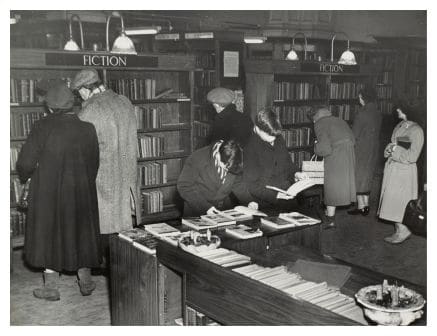 Equally mentioned above, there are certainly times when inspectional reading is appropriate. It's specially useful when you lot're at the bookstore trying to pick out your next book and deciding if the unknown object in front of you is worth the dough. (The good news is that you tin also exercise this with ebooks — in almost cases y'all tin scan the cover, the table of contents, the introduction, etc. before actually buying.) This blazon of reading is also handy when trying to acquire new things rapidly, or when you're simply trying to get the gist of something. Information technology'due south great for the kind of reading you lot should be doing to stay current in your career likewise; books related to a certain industry can ofttimes be full of fluff and chapters that just don't utilise to your particular job, and inspectional reading lets you lot glean the things that are really helpful without wasting time on irrelevant material.
You can oftentimes become a pretty good feel for a book with inspectional reading by following the steps below. (To get the most out of this, you can really follow forth with a book off your shelf — it will only take 5-10 minutes.):
- Read the championship and look at the front and dorsum covers of the book. This seems obvious, but if you pay attention, you can glean much more than you would have originally thought from just the cover of the book. What'due south the title? Spend x seconds thinking nearly the title and subtitles. What is information technology telling you lot? Nosotros often glance over titles, but they often offer deep insight into the pregnant of the book. I think of some of the classics I've recently read, The Lord's day Besides Rises, The Grapes of Wrath, even Frankenstein. There's more to these titles than meets the eye. In that final case, I'm told that the book is really more about Victor Frankenstein than about the monster he creates. It's more about his homo grapheme than about horror. Are there images on the cover? What could those images be conveying? An incredible amount of time and money goes into cover art, so don't fail it. What does the blurb on the back of the volume say? We often quickly scan these, merely if nosotros're paying attention, they give us a great, succinct plot that ofttimes reveals what the volume is truly about. Now it should be said that sometimes titles, comprehend art, and blurbs are designed more than for marketing and increasing sales than they are about accurately conveying the ideas of the volume, but they tin usually still provide us with valuable clues every bit to the volume's content.
- Pay special attending to the first pages of the volume: the table of contents, the preface, the prologue, etc. These are incredibly useful pages. The tabular array of contents will give you an outline of the entire book, which with non-fiction can tell you much of what yous need to know right there. Information technology'due south a little harder with fiction, and many novels don't accept a table of contents, but take advantage of the ones that exercise. Especially with novels that are considered classics, you'll often go all kinds of introductions and prefaces. For instance, my 50th anniversary one-volume edition of The Lord of the Rings has a very detailed iii-folio table of contents. That'southward followed by a "Note on the Text" that gives me a chip of its publishing history and Tolkien'southward process in writing. I then have a "Note on the 50th Ceremony Edition" that tells me that certain changes were made using Tolkien's notes and journals. In that location's then a foreword from Tolkien himself that tells a petty bit of his own purpose in writing. And and then I get to the prologue, which is office of the book itself. Even reading just the outset sentence tells me, roughly, what the entire series is about: "The book is largely concerned with Hobbits, and from its pages a reader may discover much of their character and a little of their history."
- For non-fiction, skim headings and read the concluding chapter. The headings will actually often tell you the bulk of what you need to know of whatsoever non-fiction book. The text below the headings is often just fleshing out that main thought or theme. You can also read the conclusion to get a feel for what the writer idea the main purpose or point of the book was. This is a little harder with fiction, as you don't oft get much for headings (outside of chapter titles), and at to the lowest degree for me, I certainly don't want to know the terminate of the book. Although, I practise know a fair amount of people who do; I still don't understand that.
- Consider reading some reviews of the book. Your about likely destination will be Amazon. Oftentimes the top-rated review on Amazon offers a lot of information about the volume – a summary and/or some of the book's strengths and weaknesses. Unfortunately, yous also accept to take Amazon reviews with a grain of salt. Some negative reviews are from people who perhaps read a chapter and didn't like something (meet beneath regarding how to critique a book), or didn't read the book at all! And sometimes people simply have an axe to grind confronting the author and are trying to "sabotage" them. And sadly when information technology comes to positive reviews, authors and publishers these days will sometimes pay for fake reviews of the book (a good clue for this is a whole boatload of v-star reviews posted on the very same 24-hour interval/calendar week the book is released). So wait at the aggregate rating the book has received, then read a few 5-star, 3-star, and 1-star reviews and evaluate their credibility in order to go a amend overall sense of the quality of the book.
Analytical Reading
You don't need to do this blazon of reading for just annihilation. Only undertake it if you really want to get the nearly out of the book in forepart of you. Even Adler mentioned that not every book deserves this thorough treatment. But, many practice. To read a great book and just throw information technology back on the shelf to collect dust is in many ways a waste product. The tips below apply to both fiction and non-fiction, only I'll note where something may differ.
Let'southward find out how to get the most out of what we read:
Beginning, await up a chip virtually the author and the other books he/she has written. This is a personal affair. Before I choice up a book, I almost always wait up the author and/or the book itself on Wikipedia. I like to know how old the writer is, what some of his or her motivations were, how autobiographical it may be if it'south a novel (yous'd be surprised how many are), etc. This just gives yous a little context into the writer'south life that will hopefully help you empathise the book a piffling meliorate.
Second, do a quick inspectional reading. This is partially why I wanted to encompass inspectional reading in the first place. A skilful, thorough reading of whatsoever book will include it. Look at the cover, always read the opening pages, etc. I know far too many people who never read introductions and just get correct into page one. You're skipping the valuable data that tin actually frame the unabridged way you read the book. You don't need to spring alee to the conclusion, but at least get all that you can out of the cover and those opening pages.
Third, read the book all the way through, somewhat quickly. Adler really calls this a "superficial reading"; you're simply trying to assimilate the overall purpose of the book. At present, this doesn't necessarily mean speed-reading. It more means that you lot won't cease and scrutinize the meaning of each and every paragraph. Information technology means that when yous get stuck in a identify that's hard to empathise, y'all'll keep on going anyway. It means that when the story slows down a little and gets slow, you don't only read 10 pages a day, only you'll keep powering through with the purpose of understanding the catamenia of the book equally well as you can correct off the bat. In this reading you are underlining or circling or taking notes on things you lot have questions about, but y'all aren't looking into those questions simply yet. When you're washed with the book, go dorsum through and look at what you underlined or circled or took some notes about. Try your all-time to answer a few of those questions y'all had. If you have the time and desire, re-read the whole thing once again. I often do a semi-quick reading like this for many classics that I'm reading for the first time, simply then I'll get dorsum a few months later (okay, sometimes information technology ends up beingness years) and read it a little more than slowly.
This is where many people struggle with reading older or more complicated books. You might stop 50 pages into The Iliad because you're just too confused about the language and the style. It's actually best to but power through that and understand what yous tin can, and so come up back to your misunderstandings later. Better to have some knowledge than none at all.
Fourth, use aids, only if you lot have to. If there is a word you don't know, outset expect at the context to try to discern its significant. Employ your ain encephalon to get things going. If it'south something yous merely can't go past, or the word is clearly too of import for you to glance over, then pull out the dictionary. If there's a cultural reference that you tin can tell is important to understanding the particular passage, Google it. The chief point is that you tin can use the tools around you, but don't lean on them. Let your brain piece of work a trivial chip before letting Google work for you.
Fifth, reply the following four questions as best as you lot can. Now, these questions could take been listed as the get-go step, as you should go along these in mind from the 2nd y'all beginning reading. Simply, they quite obviously can't be answered until you lot've read the book. This, Adler says, is actually the key to analytical reading. To be able to answer these questions shows that you have at least some agreement of the book. If you tin't answer them, you probably haven't quite paid attending well plenty. Too, it's my opinion that you should actually write (or type) these answers out. Consider it to be like a book journal. It'll stay with you and go much more ingrained than if yous merely reply them in your head.
- What is the book nearly, every bit a whole? This is essentially the back cover blurb. Don't cheat, though. Come up, in your own words, with a few sentences or even a paragraph that describes what the book is about. This tin actually exist surface level; y'all don't have to dig too deep. For instance, boy meets girl, boy falls in beloved with daughter, boy makes stupid fault and distances himself from girl, male child redeems himself and gets the daughter.
- What is beingness said in detail, and how? This is where y'all first to dig a fiddling deeper. When you're done with that kickoff reading of the volume, Adler recommends writing an outline of the book yourself and so yous get a experience for its arrangement and overall tenor. Briefly go dorsum and folio through the volume, jogging your memory of the central points. With non-fiction, outlining is pretty straightforward. With fiction, you could practice information technology past chapter or by setting/scene. By chapter y'all would only listing the chapter numbers/names and a couple sentences of what it'south about. For books with very brusque capacity, it could even just exist a few words. For setting/scene, you but follow the characters effectually and say what happened of significance there. I just finished The Dominicus As well Rises, which could be segmented into its various settings: Paris, the angling trip, Pamplona, and mail-Pamplona where the characters go their separate ways.
- Is the book truthful, in whole or in part? These terminal two questions are where we get to the meat of reading. Every bit before, for non-fiction, this is a relatively piece of cake (or at least easier) question to answer. Is what the author said truthful? Are the facts they presented true? With fiction, it's more most asking if what was written is true to the full general human experience, or fifty-fifty to your ain experience. In The Great Gatsby, is that feeling of loss and the futileness of not bad wealth true to the human experience? I would certainly say and then. This is partly what turns cracking books into classics. They ultimately speak to the about basic truths of humanity in story form.
- What of it? What's the significance? If the volume is indeed proverb something true about the homo experience, or about manliness, what's the takeaway? If something strikes a chord with you, and yous exercise zilch with information technology, it becomes at least partially wasted. In that location is something to exist said about literature that stands on its own merits of merely beingness great literature, like art, simply I've learned in that location is almost always a takeaway. Or at least a way in which you may think differently about the globe. My understanding of life in America during the Dust Bowl was profoundly increased after reading The Grapes of Wrath. In that location wasn't necessarily something I would do in reaction to information technology, but my appreciation for farmers and farming families of that fourth dimension menses certainly grew. That's definitely a valuable takeaway.
6th, critique and share your thoughts with others. Detect that this step is dead concluding. Simply after having read the entire book, and thoughtfully answered the questions above, can y'all critique or take meaningful discussions nigh the book. When reading Amazon reviews, it's articulate when someone stopped reading three capacity in and gave a terrible review. Be extra careful most coming right out and saying, "I understand the book." Y'all can certainly understand parts of a volume, only to have no questions at all probably means that it wasn't actually a good book to showtime with, or you are total of yourself. When discussing, be precise in your areas of understanding or disagreement. To just say, "This is stupid," or, "I don't like it," offers aught to a conversation. Likewise know that you don't have to hold or disagree with everything virtually or in a volume. You can love some parts and really dislike others.
Now you've read a book for all its worth! Huzzah! To execute all of these practices for every book you read would exist exhausting and fourth dimension-consuming. I know that my enjoyment would probably exist lessened if I did this for everything I read. So, take a few points and apply them to your reading. Personally, I resolved to read the difficult books I encounter all the way through (not something I've always done in the past), and to keep a short journal of every book I read that answers, at least in part, the four questions above.
Why Read Analytically?
This can sound like a lot of work, and you may be request yourself if analytical reading is actually worthwhile. Isn't reading something y'all do for pleasure and entertainment? Partially, yes. You certainly don't need to be sketching out an outline while you're reading Dan Brown's Inferno on the beach this summer (although maybe doing so volition assistance yous solve the mystery earlier Langdon does).
As the tardily great Stephen Covey taught united states, still, a man should always be "sharpening the saw." This means keeping yourself sharp in all areas of your life. Doing any kind of reading is beneficial, just engaging in analytical reading from time to fourth dimension tin can profoundly enhance these benefits and help us become better men in several ways:
Increases your attention span. The cyberspace has given u.s.a. more reading opportunities than ever earlier. Merely oftentimes our cyber reading consists of skimming and/or quickly jumping from one thing to the adjacent without giving each much thought at all. Take you ever tried to talk to someone about something you read on the net earlier in the day only to find you couldn't really recall much almost information technology? Reading a book analytically gives your focus and your skills for diving into a single thing deeply and mining it for all information technology'due south worth some much needed training and exercise. It greatly sharpens your ability to handle something every bit a whole, rather than in part.
Enhances your critical thinking abilities. You can read, but how are you at examining something critically? Belittling reading hones your ability to evaluate truth, counterbalance evidence and sources, synthesize data, make connections between dissimilar things, evaluate claims, observe wisdom hidden below the surface, sympathise others' motivations, interpret symbolism, and draw your own conclusions. Quite obviously these skills are not limited to helping yous better enjoy books, but are admittedly vital in becoming an independent, perceptive, and well-informed citizen and man.
Shapes you into a better human being. A man who sees personal growth as existence something important to him will take fourth dimension to meditate on life and consider the areas in which he can improve. Books facilitate this reflection in a unique manner because they nowadays united states with characters or stories (be they real-life or fictional) that we can chronicle to in at least some small way.
Equally an example, I simply finished the recent sci-fi striking, Wool. It'due south a unique story with bully characters, and the writer is fast becoming a celebrity in the indie publishing world. I could have quite easily read it and moved on to the next book in the series. But to intermission, and read through passages that I highlighted, and take even just x minutes considering what tin exist learned from the book gave me a greater reading experience. Wool forced me to ask myself if there are areas of improvement in my life that I've glanced over simply considering it'southward something I've always washed. Information technology forced me to inquire nigh the ways in which I've lessened run a risk simply considering it was the easier way to alive. I learned that doing the right thing is frequently terribly uncomfortable. Information technology's not the offset fourth dimension I've learned that lesson, just seeing information technology once again in a unique story gives me yet some other chance to be reminded of the importance of that lesson.
Reading analytically offers valuable opportunities for this kind of needed reflection and can help you recall through the kind of human being you are, don't want to exist, and definitely hope to get.
Additional Reading Tidbits
- Consider newspaper vs. ebook. I was one time a Kindle devotee. I still do a lot of reading on it, but I've moved to actually preferring paper. Even though you lot can scan all your Kindle notes and highlights at once, it's actually easier to navigate a paper volume, and skim it, in my opinion. At that place'southward likewise something to exist said virtually the reading experience. With digital devices, you really only go i sense involved — sight. With a concrete book, you get multiple senses involved, making it a more than immersive experience. You lot tin can experience the paper on your fingers as you turn the page, you can smell that new book (or one-time book) smell that is so distinct. What'southward your preference? Has information technology changed?
- Consider new vs. used. This is just a personal thing, but I love used books in many cases. I appreciate only knowing that someone before me has enjoyed this very text. Specially when it's an old book, it's always fun to wonder how many people had their optics on these words, and what kind of setting they were in. On an airplane in 1960? In a bar in the 80s? Perhaps in college merely a few years ago?
- Consider your diverseness of fiction vs. non-fiction. There are significant benefits to reading a diverseness of genres. I am virtually always reading i fiction and i non-fiction book at the same fourth dimension. Your listen grows every bit yous experience new things. Don't pigeonhole yourself into thinking yous merely like one genre. I recently read some scientific discipline fiction (something I didn't think I liked very much) at the recommendation of a friend, and now I want to read much more. I'yard hooked.
- Consider whether to take notes in the volume itself. I dearest underlining great sentences and taking short notes in pencil of things that pop into my head as I read. The only time I don't exercise this is when it's a book I plan on either giving to a friend to read, or giving abroad to Goodwill or a used bookstore. Some people are quite opinionated about this one, so let'southward hear your thoughts!
Continue upwardly with all my reading and bookish ideas by subscribing to my weekly newsletter.
Tags: Books
Previous Side by side
Source: https://www.artofmanliness.com/living/reading/how-to-read-a-book/
0 Response to "Best Position to Read a Book Reddit"
Post a Comment